





Sain baina uu! I’m Takeshi from Tsogto Mongol Horse Riding Tour.
The traditional Mongolian home is called a ger. You may know it as a yurt — and in China it is called a bao (or “pao”). It is a round house made of a wooden frame wrapped in sheep’s-wool felt, and nomads take it apart and carry it with them every time they move with their animals.
Here I explain the difference between a ger and a yurt, the names of each part, and the house rules to follow inside — with some stories from my own nights in gers on the steppe.
| Name | Origin | Where it is used |
|---|---|---|
| Ger | Mongolian for “home” | Mongolia |
| Bao / Pao | Chinese 包 | Inner Mongolia (China) |
| Yurt (yurta) | Turkic/Russian name | Central Asia, e.g. Kyrgyzstan; common in English |
Ger, Yurt, Bao — Mostly Just Different Names

All of these names refer to a round, portable house with a wooden frame covered in felt. The main difference is the language of the people using the word.
“Ger” means “home” in Mongolian
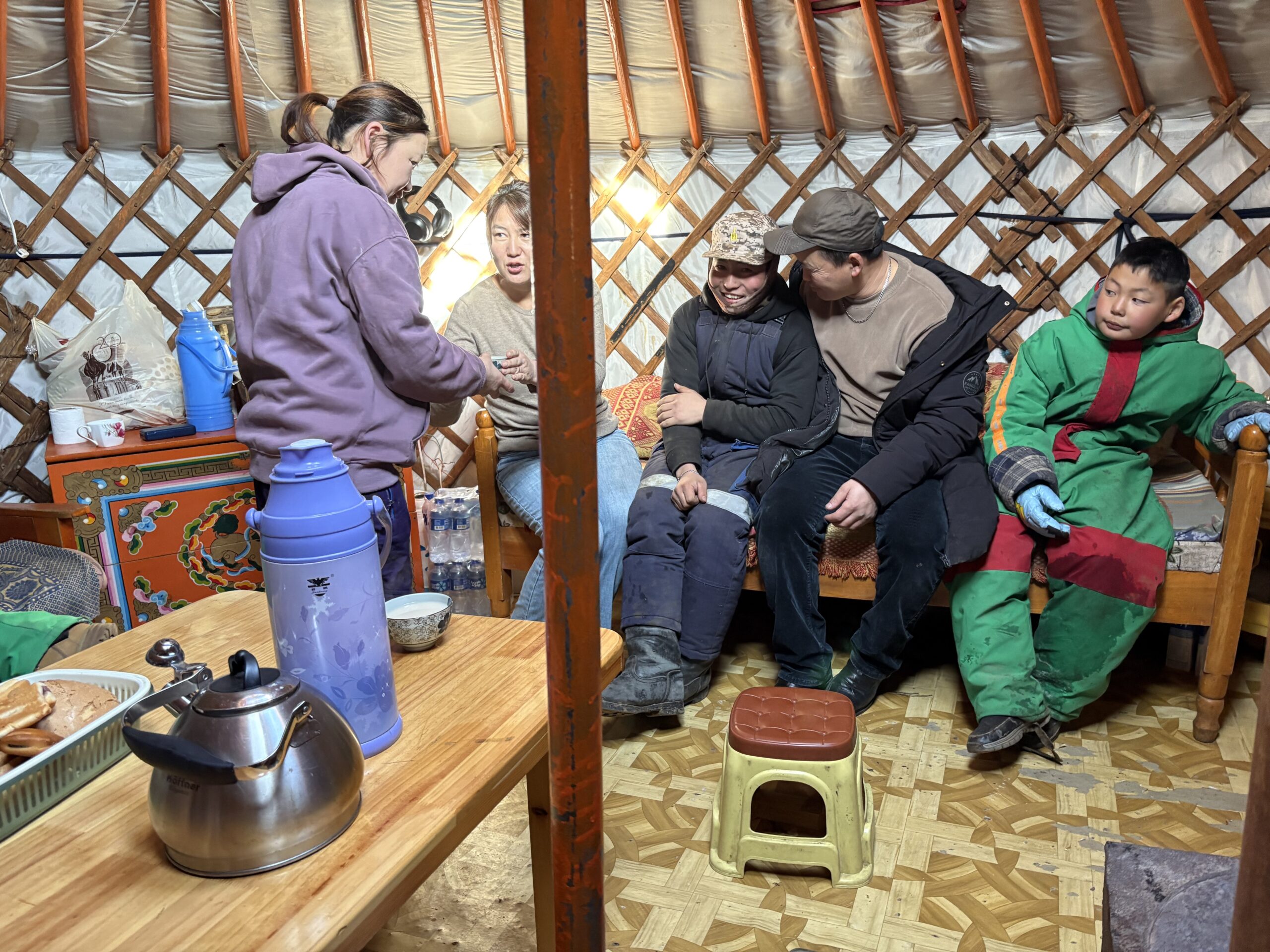
The Mongolian word гэр (ger) simply means “home.” The word for “family” is бүл гэр — it contains the word ger too, which shows how central the ger is to nomadic life.
“Bao” comes from Chinese

In Inner Mongolia, where Chinese is the official language, the same home is called a bao (包). Some say it got the name because it looks like a steamed bun, baozi — and next to Mongolian buuz dumplings, the round roof really does look similar! When you travel in Mongolia, “ger” is the word to remember.
In Kyrgyzstan it is a yurt

Similar round homes are found across Central Asia. In Kyrgyzstan they are called yurts. A Mongolian ger has two posts in the middle; a Kyrgyz yurt has none. Gers are also lower than yurts — another easy way to tell them apart.
Ger Structure and the Names of Its Parts

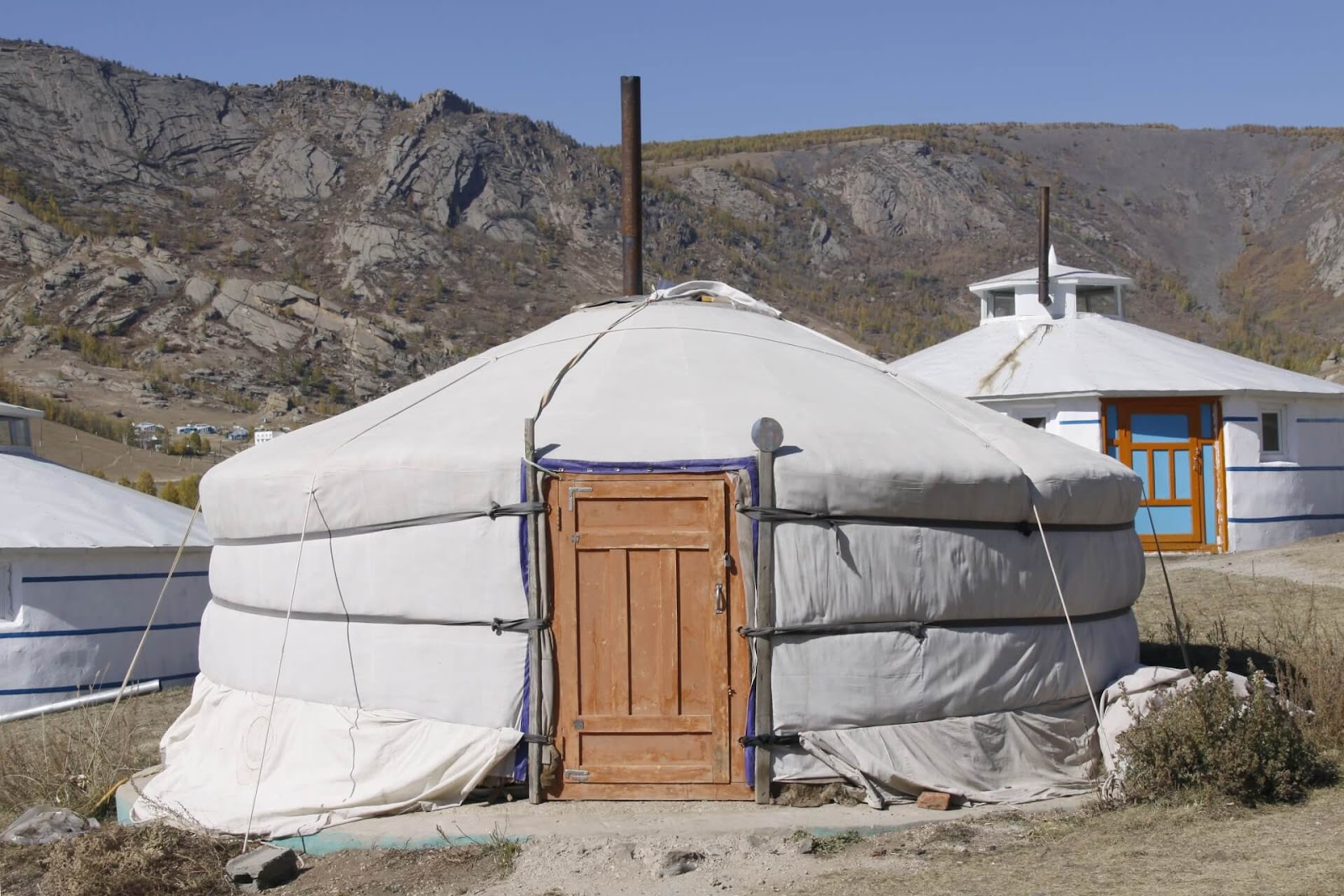
A ger is a wooden frame layered with felt and wrapped in white canvas. Each part of the frame has its own name:
- Khana: the lattice walls that expand and fold like an accordion. Four or five sections are joined into a circle; the number depends on the size of the ger.
- Door: a wooden door tied to the khana.
- Bagana: the two posts standing in the middle.
- Uni: the thin roof poles, laid out like spokes between the top of the bagana and the V-shaped tops of the khana.
- Toono: the round skylight at the top of the roof.
- Felt: insulation made from sheep’s wool, wrapped around the walls and roof — one layer in summer, two in winter.
- Outer cover: the white canvas on the outside, tied tightly with two or three ropes.
- Urkh: the flap that covers the toono to keep out rain.

The ger goes up in this order: khana → door → bagana and uni → inner lining → felt → waterproof sheet → outer cover → urkh.
How Long Does It Take to Put Up a Ger?

Experienced nomads can put up a ger in about 30 minutes. On a winter ger tour in 2017 we carried a ger with us and put it up every day as we crossed the steppe. Depending on the size of the ger and how many people help, it can also take a few hours.
The winter steppe gets bitterly cold as soon as it gets dark, so taking too long is tough. When the ger was finally up, the fire was lit and we were handed bowls of hot suutei tsai (salty milk tea) — pure happiness.
House Rules Inside a Ger

A ger is one large room with no partitions. Instead of walls, there are long-standing rules about where things go and where people sit.
The door faces south, the stove is in the middle

The door of a ger always faces south. In the middle stands the stove, used for both heating and cooking, with its chimney going out through the toono. Tourist gers have beds lined up, so they feel a little different from a nomad family’s ger — but both have a stove.
The back is the place of honour; men on the west, women on the east

The north side, furthest from the door, is the place of honour, and is often where the family altar stands. The west side (on your left as you enter) is the men’s side, where tools such as those for making airag (fermented mare’s milk) are kept. The east side (on your right) is the women’s side, with the kitchen things.
Don’t walk between the two posts

The space between the two bagana is considered sacred, and you should not walk through it. It is believed to be where the god of fire and the spirits that come in through the skylight pass, protecting the family. Since it is right by the stove it is tempting as a shortcut — please take the long way round, outside the posts.
Today’s Nomad Gers Run on Solar Power

You will often see a solar panel standing next to a ger on the steppe. Between 2000 and 2012, a national programme brought solar power to nomad households, and the share of herders with electricity rose from 0% to about 70% (source: IEA, 100,000 Solar Houses (Gers) National Programme).
Ger FAQ

Aren’t gers cold in winter?
Gers have a wood-burning stove, and when the fire is going it is warm inside, even in winter.
Is there a toilet inside a ger?
Nomad family gers have no toilet inside — you use an outdoor toilet. Some tourist ger camps have a separate building with flush toilets. See our guide to toilets and showers in Mongolia.
How can I stay in a ger?
You can stay in a tourist ger camp built for travellers, or with a nomad family in their ger. On our riding tours you stay in tourist gers and tents along the way.
Stay in a Real Ger
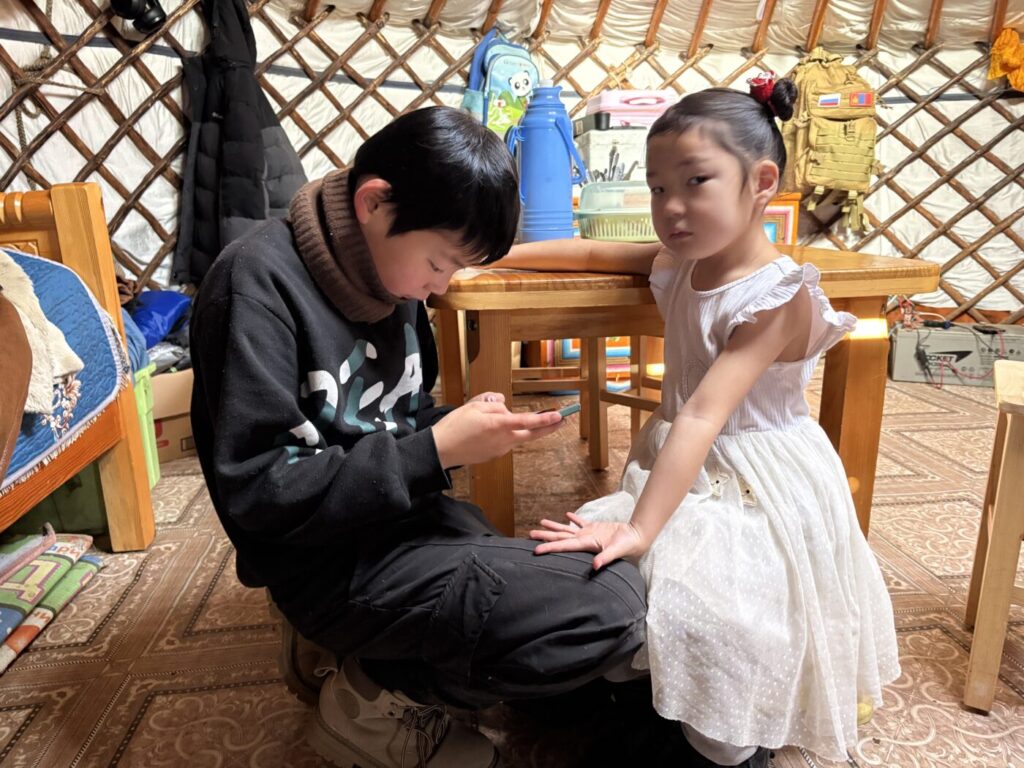
The best way to see the uni and toono is to lie on your bed inside a ger and look up. Come and experience ger life on the Mongolian steppe for yourself.


