




Sain baina uu! I’m Sugi from Tsogto Mongol Horse Riding Tour.
If you are trying horse riding in Mongolia for the first time, safety is probably your biggest concern. “What if I fall off?” “Is it really OK for a beginner?”
Helmets and protective gear are essential. But even more important is which horse you ride. In this article I explain how we choose and care for our horses, and the mindset that keeps you safe in the saddle.
A Good Horse Is Not Just a Quiet Horse

Many people think a safe horse is one that does whatever it is told, or one that is very quiet. We see it a little differently.
A horse that is still a “real horse” is actually safer

Horses that plod along in a line at tourist spots may look safe. But sometimes they are simply worn out from being ridden too much.
For us, a good horse keeps its natural instincts — it grazes on its own and knows how to live in a herd — while also being smart enough to listen to people. A horse that is healthy in body and mind responds to your signals and can communicate with you as a partner. That is what real safety in the saddle looks like.
Tourist-ranch horses vs. nomads’ horses

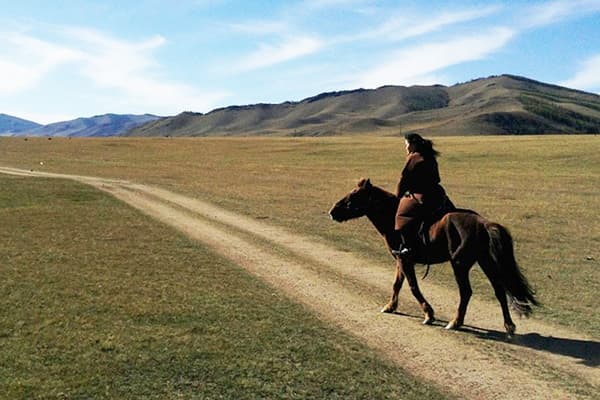
Horses at typical tourist ranches can work all season without a break and build up a lot of stress. Our horses are raised by nomad families as part of their everyday life. From herds of more than 1,000 horses, we choose those with a calm temperament and good training.
How We Look After Our Horses

We treat our horses not as vehicles, but as members of the team.
A rotation system that gives horses time off

Horses get tired too. To avoid overworking any one horse, we give them regular breaks: they go back to the herd and graze freely on the steppe. A rested horse is gentler with people and follows instructions more willingly.
Working with the local community

Instead of owning all the horses ourselves, we hire horses from nomad families in the area. When you ride, that money goes straight to the families and supports their way of life. That is why they take such good care of their horses and send them out on tours in the best possible condition.
Important: Horses Are Still Animals

However well trained, a horse is a living animal, not a machine.
Horses that live close to nature can get startled

Our horses live in the wild, so a sudden event — like a bag bumping against them — can make them react. That is a sign that they are healthy and alert, but as a rider you need to understand that horses can be startled and know what to do when it happens.
A request to every rider

Please don’t think “I’ve paid, so the horse will do everything.” Think of it as becoming partners with a living animal. That attitude is the best risk management there is.
Mongolia Riding Safety: The Essentials

Here are the minimum rules for riding safely. Please read them before you join a tour.
Clothing and equipment

- Helmet and chaps: free to borrow. Always wear them.
- Shoes: no hiking boots with chunky soles and no heels — they can catch in the stirrups. Sneakers or flat-soled rubber or snow boots are best.
- Bags: use a cross-body bag or waist pouch that sits close to your body. A bag that bounces around can startle the horse.
Around the horses

- Never approach from behind — you could be kicked. Approach from the front left and speak to the horse.
- Avoid loud voices and sudden noises. Horses are sensitive — even the sound of Velcro or a rustling plastic bag can surprise them.
If you are about to fall
The best thing is not to fall, so do your best to stay on. But if you know you are going to come off:
- Take your feet out of the stirrups. Being dragged with a foot caught in a stirrup is the worst case.
- Let go of the reins, curl up and roll as you land.
▼ For the full version, including the top causes of falls and what to do in an emergency, read our Mongolia Riding Safety Manual.
Treat Your Horse as a Partner

A safe ride comes from two things together: healthy, smart horses, and riders who understand them. We look forward to welcoming you on the steppe with our wonderful Mongolian horses.


