



Sain baina uu! I’m Sugi from Tsogto Mongol Horse Riding Tour.
“Is there a shower in a ger?” “What are the toilets like?” These are some of the most common questions about travelling in Mongolia. The answer depends a lot on where you stay — a hotel, a tourist ger camp, a nomad family’s ger or a tent — and on the season.
Below you will find the toilets and showers at each type of accommodation used on our tours, how nomads wash, and the toilet etiquette everyone wonders about but rarely asks.
Toilets and Showers Depend on Where You Stay
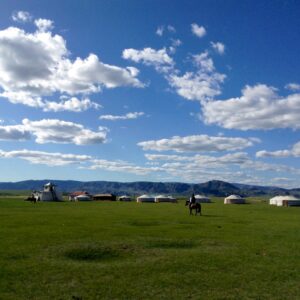
Hotels in Ulaanbaatar have flush toilets and hot showers, just like at home. Out on the steppe you will find pit toilets or “open-air” toilets, and some places have no shower at all.
Toilets
| Where you stay | Summer (approx. April–September) | Winter (approx. late October–March) |
|---|---|---|
| Erdene Tourist Ger Camp | Flush toilets, available 24 hours | Pit toilet in a private cubicle with a door and a seat over the hole; lights and toilet paper provided |
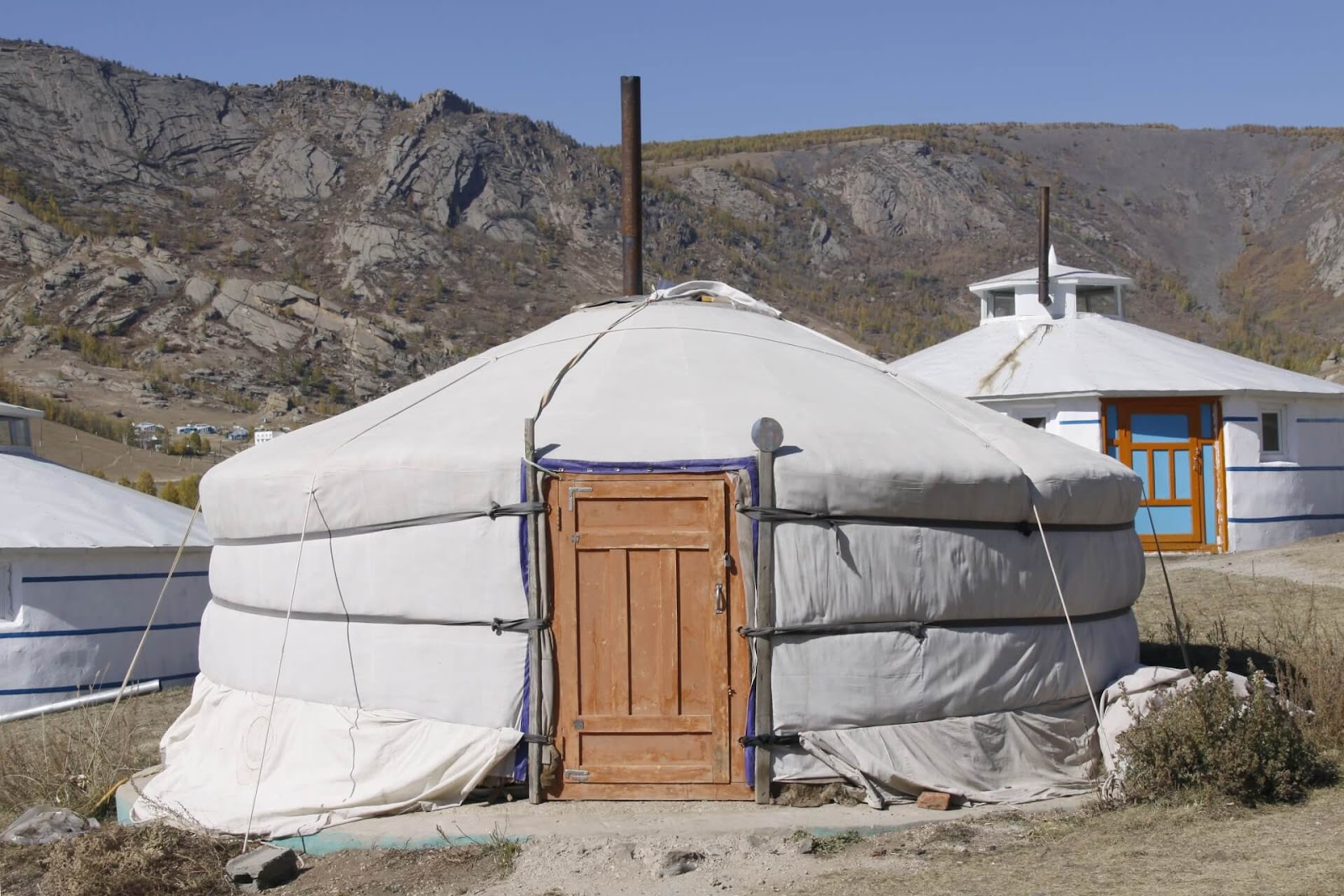
| Nomad family ger | Pit toilet outdoors, away from the ger — two planks over a hole with walls around it | Outdoor pit toilet; some days drop to around −40°C |
| Tent camping | No toilet facilities — you go outdoors, behind a hill or a rock | No tent tours in winter |
| Hotels (Ulaanbaatar, Terelj) | Flush toilets | Flush toilets |
| While riding or driving | Open-air toilet | Open-air toilet |
Showers
| Where you stay | Summer | Winter |
|---|---|---|
| Erdene Tourist Ger Camp | Hot showers | No hot showers; we can take you to a paid shower facility in town |
| Nomad family ger | No shower. You can wash your hands and face at the washstand in the ger, and wash your hair with water or hot water. We can also take you to a paid shower at a nearby tourist camp | No shower |
| Tent camping | No shower. Use bottled water to wash your face and hands and brush your teeth | No tent tours in winter |
| Hotels (Ulaanbaatar, Terelj) | Hot showers | Hot showers (Ulaanbaatar hotels) |
In winter, flush toilets and showers are turned off
At Erdene Tourist Ger Camp, the flush toilets and hot showers are closed from October to around the end of April because the pipes can freeze. Even around 20 September they may be unavailable on days when it drops below zero. On winter tours we can take you to a paid shower facility in town.
Don’t Flush Toilet Paper in Mongolia
In Mongolia you never flush toilet paper, wherever you are. How to dispose of it depends on the toilet:
- Flush toilet: put it in the bin provided
- Pit toilet: drop it into the hole
- Open-air toilet: take it with you and throw it away where there is a bin (see why below)
Washing Like a Nomad

Once you leave Ulaanbaatar and the provincial centres for the steppe, there are basically no baths or showers. In some places there are hot springs where you can soak up to your shoulders, but most nomad families have neither a bath nor a shower.
In one family our staff stayed with, the children sat in a large plastic tub while warm water was ladled over them. The adults seemed to wash their hair once or a few times a week. Mongolia is dry all year round, so you don’t sweat much — and sweat dries quickly — so going a few days without a shower is less unpleasant than you might expect.
The essential item: large wet wipes

Water on the steppe comes from wells, rivers or deliveries, so it takes effort and money to get. When you can’t use much water but want to feel fresh, large, alcohol-free wet wipes (or adult body wipes) are a lifesaver.
- They are big: one for your body and one for intimate areas is enough to feel clean.
- There are no bidets out on the steppe, so they are also useful after the toilet or during your period.
- Even at five a day, a pack of 50 lasts ten days. Leftovers make a welcome gift for local people.
- You can also buy them at supermarkets and shops in Mongolia.
When you really need a shower
Our staff once lived for about a week with only wet wipes — but after five days or so you will want a shower. Towns have paid hot-shower facilities. There is no time limit, but soap and towels are not provided: bring your own or buy them nearby. The shower head is usually fixed to the wall and the water pressure is not strong. There may be sand on the floor from the previous user, so bring sandals.

Toilets in Mongolia: What to Expect
This part is written from the point of view of our female staff — but most of it applies to everyone.
In buildings
Apartments, department stores and restaurants in Ulaanbaatar mostly have Western-style flush toilets, without bidets.
In towns and on the road
Public toilets and toilets behind roadside restaurants are often squat flush toilets or simple wooden “outhouse” toilets — a cubicle of boards over a pit, with two planks to stand on. Some flush toilets charge a small fee.

Winter camps have taller toilets with a roof, to keep out the wind.

Open-air toilets
In the countryside and along the road, you will go outdoors under the open sky. It can feel awkward at first, but once you get used to it, it is surprisingly comfortable!

1. Always carry toilet paper
Even paid toilets may give you rough recycled paper, or none at all, so always carry your own.
2. Take your used paper with you
This is the most important rule for open-air toilets. Mongolia gets only 50–300 mm of rain a year depending on the region, usually in short showers, so even “flushable” paper never breaks down. Left behind, it blows away or gets eaten by livestock. Put it in a small bag (an airline sickness bag works well) and throw it away later where there is a bin.
3. Bring a long jacket or tie a hoodie around your waist
When you squat, a long jacket or a hoodie tied around your waist gives you some privacy. Drivers stop at spots out of view of the road, but it doesn’t hurt to have. A traditional deel is perfect for this!
4. Tell the driver early
Not every spot on the steppe is suitable — drivers look for a dip in the land where you can’t be seen from the road, and it can take a while to find one. Let them know before it gets urgent. In Mongolian: “Biye zasamaar baina” (Бие засмаар байна) — “I need the toilet.” Long-distance buses stop for a toilet break every three to four hours.

5. Watch out for stinging nettles
The most painful hazard is khalgai, a stinging nettle. One of our staff crouched behind a bush and got stung on her bottom — and then on her hand as she brushed the plant away. The skin turns red and swells, and it takes a long time to settle down. Bring anti-itch cream and look around carefully before you crouch.

For women: if your period starts unexpectedly
If your period comes early and you are running out of pads in the countryside, a folded packet tissue placed on a pad works surprisingly well to make it last longer. It is not perfect, so use it only in an emergency. If you really need help, you can tell a local woman “Saryn yum bolchikhson” (Сарын юм болчихсон) — “My period has started.” Best of all, pack extra. Pads are also sold in supermarkets and local shops.
Never leave used pads in a toilet without a bin or out on the steppe — bag them and dispose of them later with the rest of your rubbish.
Know Before You Go
Once you know where you will stay and in which season, you can prepare for the toilets and showers. Even a few days without a shower is surprisingly fine with a good pack of wet wipes.
For more practical tips, see 12 things to know before travelling to Mongolia.