[Must Read] Mongolia Horse Riding Safety Manual

Sain baina uu! I’m Takeshi from Tsogto, a travel company specializing in Mongolia.
In this article I’d like to share our Mongolia Horse Riding Safety Manual.
Horse riding involves risk.
- For your safety, please read this manual carefully and make sure you understand the basics of riding before you get on a horse.
- We cannot accept any liability for falls or other accidents. Please make your own preparations for the unexpected, such as taking out travel insurance.
You may ride only if you agree to the above. *All riders sign a waiver before riding.
1. Introduction
1-1. Our goal: horse and rider as one
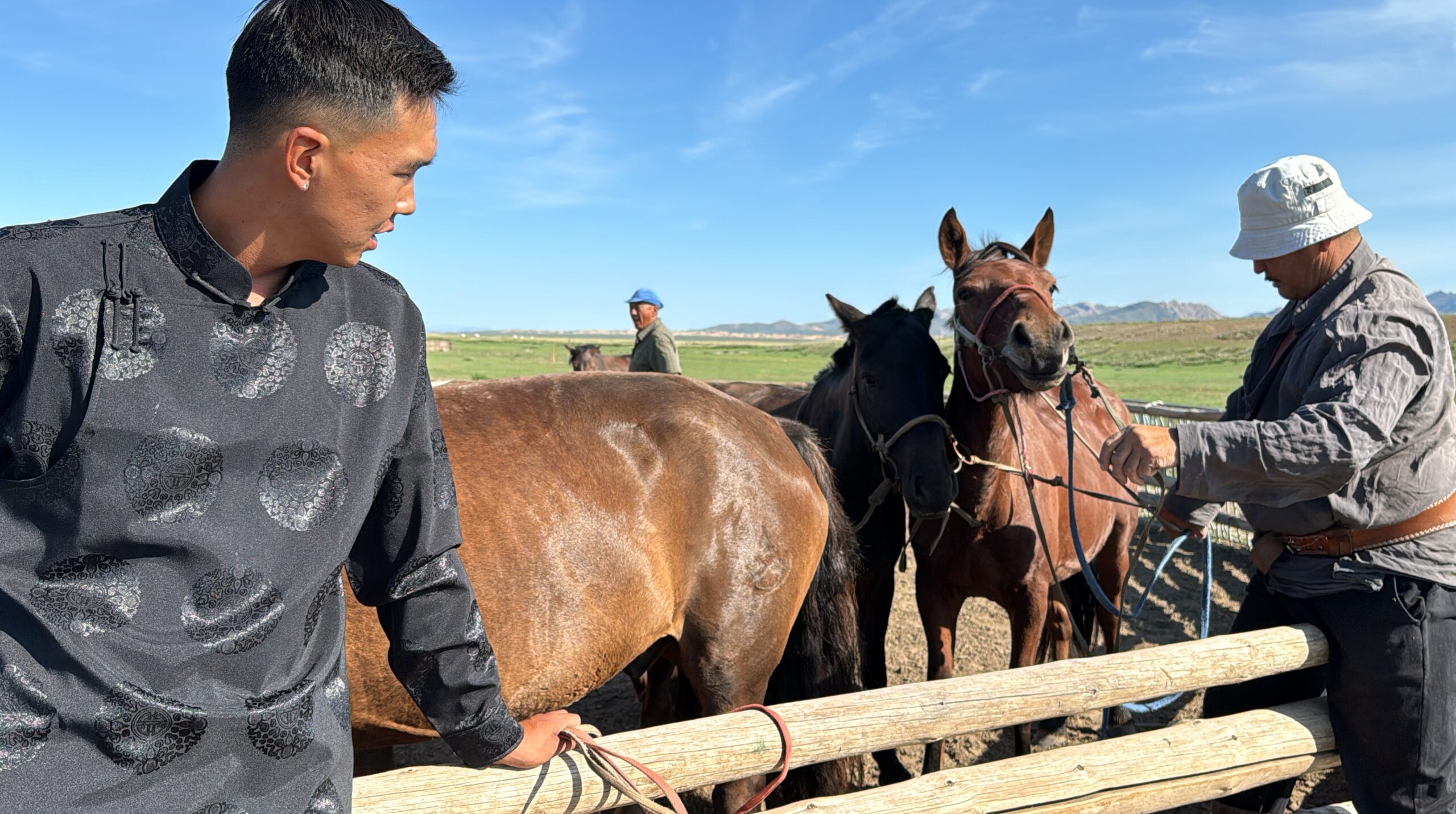
At Tsogto, we believe the greatest joy of riding is the feeling of becoming one with your horse. When your hearts connect, you feel as if you could become the wind and gallop on forever. It is a special experience that nothing else can replace.
We don’t start with detailed lectures or teach you an artificial “correct form.” We want you to learn by actually riding. For Mongolian nomads, the true riding teacher is none other than the horse itself.
We have designed our tours around the belief that listening to every sense in your body under the open sky of the steppe is the shortest path to that feeling of oneness. Stay attuned to your horse’s feelings, and enjoy riding safely!
1-2. Our requests
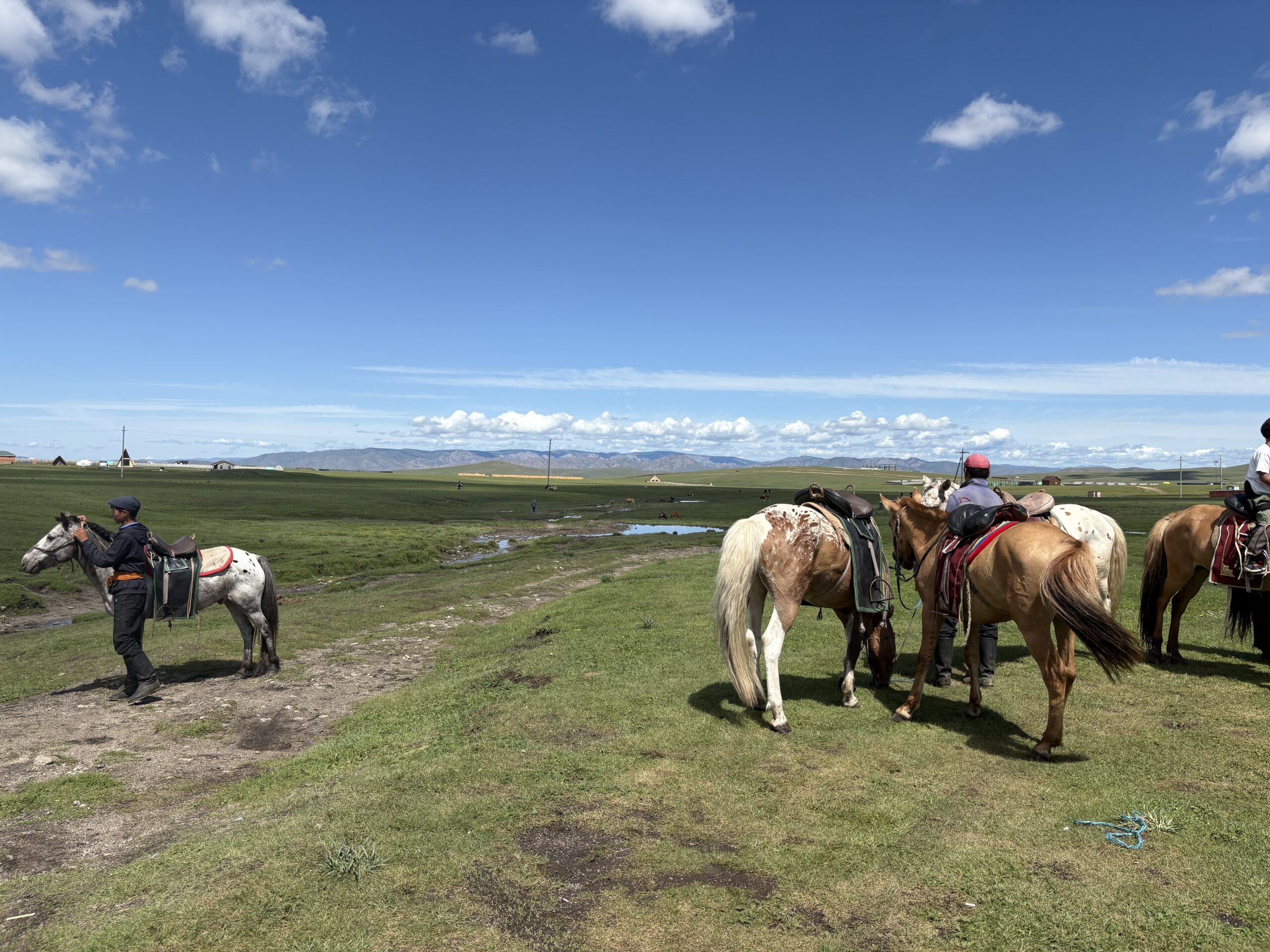
● Always follow the staff’s instructions. If anything is unclear or isn’t going well, please don’t hesitate to ask. Each rider rides their own horse. (For small children, please talk to us.) On guided tours, at least one nomad horseman and one guide ride along with each group.
● For beginners If you are a beginner, please let us know before you ride. All of our horses are calm and easy to ride, but we choose especially gentle horses for beginners and older riders. A nomad will also lead your horse until you get used to it. We may divide the group further according to each rider’s experience. Even if everyone around you is experienced, please never push yourself, physically or mentally.
● Departure times To adapt to the weather, your condition and the condition of the horses, departure times can change at any time. We will let you know each time, so please be ready and waiting by then. When it’s too hot we may shift the riding time, and we adjust the riding to suit the group’s size and condition. If the free-grazing horses have been chased far away by wolves during the night, we may also need to drive to wherever the horses are.
The basic schedule is riding from 10:00 to 12:00 and from 15:00 to 17:00.
● As a rule, you cannot take photos yourself while riding. In principle you cannot take photos with a phone or camera in your hand, but cameras that are fixed to your body or can’t fall are fine. Our guide can take photos for you — just ask. We cannot accept responsibility for any damage to your equipment.
*Filming with a GoPro or similar mounted on your body, with both hands free, is no problem.
1-3. Background knowledge about Mongolian horses
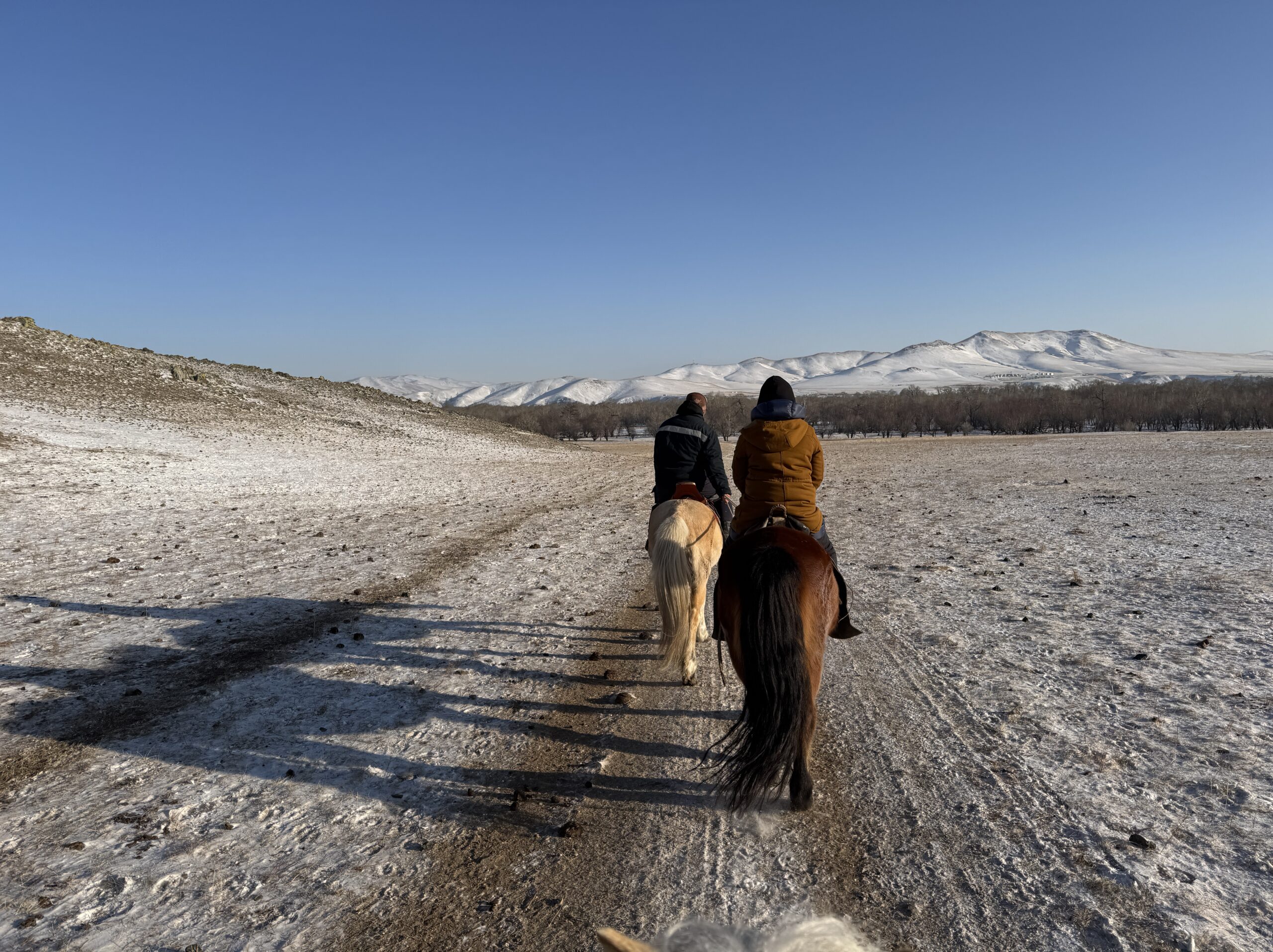
● What horses mean to Mongolians Chinggis Khaan, founder of the Mongol Empire, built his vast empire on horseback. The horse racing he encouraged is still one of the most popular events at Naadam, Mongolia’s national festival. Horses sustained the nomadic way of life and are a symbol of pride for Mongolians.
● The Mongolian horse breed The Mongolian horse is a breed native to Mongolia. Compared with racehorses, they are small but strong, with the vitality to survive a harsh climate. They don’t respond to fine aids and individual horses don’t have names, but nomads can tell each horse’s personality apart.
The breed is relatively small — an adult stands about 120–140 cm at the shoulder — but the body is muscular and sturdy. Coat colors vary widely: black, chestnut, gray, white and more. Mongolian horses are especially good at covering long distances, an ability that shines in endurance races.
● They are sensitive animals. As grazing animals, horses are said to have a field of vision of about 285 degrees. They can see not only ahead and to the sides but almost everything their rider is doing. Throwing things, dangling objects, approaching suddenly, thrusting out your hand, running around nearby or making sudden loud noises can all startle a horse. A startled horse may rear, jump sideways, stumble or bolt. It may also panic or buck as a defensive reaction. Always pay attention to your horse’s reactions and mood, and avoid startling or angering it. Treat your horse with kindness and consideration.
● They are herd animals. Horses move together with the horses around them. If a horse comes running up from behind, yours may start running too. Even within a herd each horse has its own personality, temperament and preferences.
● They are highly intelligent. Horses understand communication with people and can read their rider’s emotions. If you are afraid, your horse will sense it immediately and may not listen to you. Simply holding the attitude “I’m in charge — let’s enjoy this together!” can completely change how your horse responds.
● A horse’s ears show its feelings.
- [Risk: low] Ears turning in different directions: the horse is relaxed and watching its surroundings.
- [Risk: medium] Ears pricked and pointing forward: the horse is focused on something ahead.
- [Risk: high] Ears pinned back flat: the horse is angry. It may try to throw its rider or kick another horse. Ask the staff what’s wrong.
2. Getting Ready to Ride
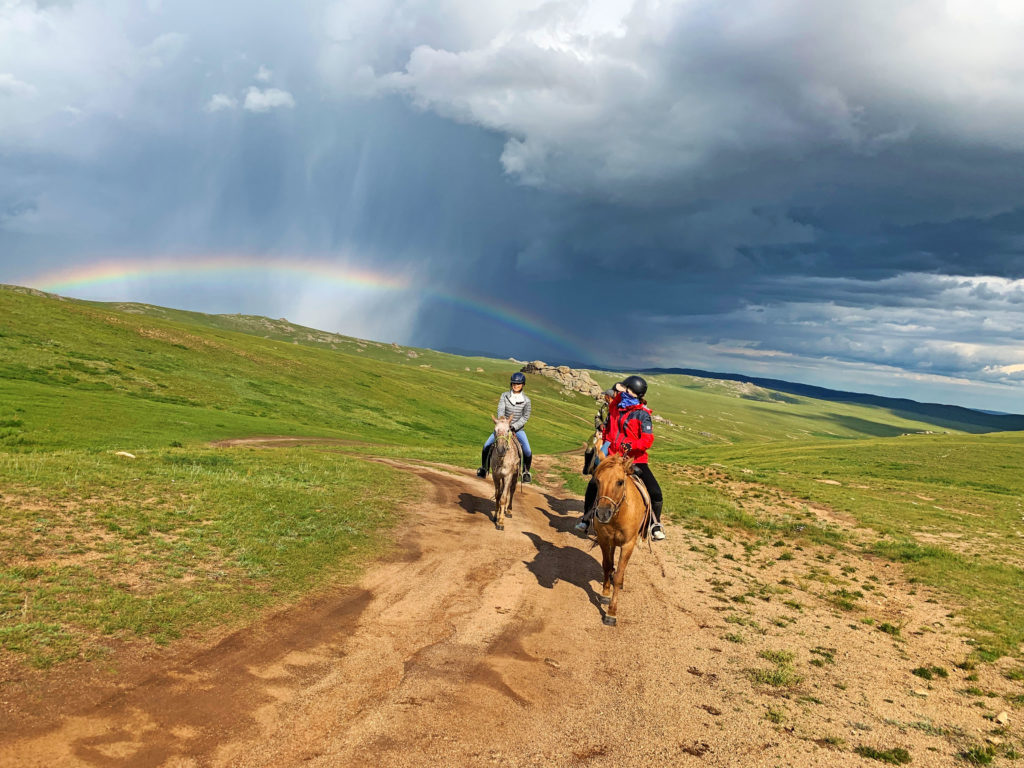 A rainbow
2-1. Looking after your health
● Warm-up Please warm up on your own and check how you feel. If you are not physically or mentally fit to exercise, use your own judgment to skip a ride or shorten your riding time.
● Alcohol If you drink the night before, please don’t drink so much that it lasts into the next day. Do not drink right before riding. It can make you dizzy or unwell on horseback. For safety, the staff may refuse to let you ride if you are intoxicated.
2-2. What to wear
Bring clothes that are easy to move in, durable and that you don’t mind getting dirty, suited to the weather and season. Please avoid clothes that rustle, flutter or are brightly colored, as they can startle the horses. Avoid large accessories and rings, which restrict movement. If there is a serious problem with your clothing, you will not be able to ride. If in doubt, ask the staff before riding.
● Upper body Long-sleeved shirts or polo shirts work well. Wear something that fits well and lets you move freely. It can get cold even in summer, so we recommend bringing a fleece or windbreaker.
● Lower body Riding breeches are great, but cotton trousers are fine too. Some horses love jeans and may cover them in drool. Avoid loose clothing, long skirts and flowing trousers, which restrict movement. Beginners may get saddle sores, so if you’re worried, bring padded cycling shorts or similar.
● Shoes If you fall and your shoe stays caught in the stirrup (the metal footrest), being dragged by the horse can be fatal. You cannot ride in high-ankled hiking boots that may catch in the stirrup, or in shoes with lugged or spiked soles. The best shoes don’t slip out of the stirrup but come out easily in an emergency.
- Riding boots: If you have your own, they are the best choice.
- Sneakers: Sneakers are fine — choose a pair with a flat sole and a low top.
- Rubber boots: OK if they have a low heel and a non-slip sole.
- Please do not wear sandals, high heels or brightly colored shoes.
● Gloves
- Thin leather gloves are best, but cotton work gloves are fine.
- In winter, insulated gloves are recommended.
- Avoid thick gloves — they make it hard to feel the horse through the reins.
- You can also ride bare-handed.
2-3. What to bring and equipment
● What to bring
- A drink and a warm layer for breaks (the lighter the better).
- Don’t wear or carry anything that might swing around or fall, as it can startle the horse.
- If you hang a camera or phone from your neck or shoulder, keep the strap as short as possible so it doesn’t swing. Horses are sensitive to this.
● Bags Please use a waist pouch or a backpack that can be fixed securely to your body.
- Backpack: Make sure it sits tight against your body so it doesn’t startle the horse. If you leave it with the staff, we cannot accept responsibility for damage.
- Shoulder bag: Please avoid — it can slide around while riding and cause a fall.
● Equipment we lend We lend helmets and chaps (shin guards) free of charge. Please always wear them.
- Helmet: We have various sizes, but if your head is particularly large, please bring your own.
- Chaps: These protect your shins from the iron of the stirrups if your feet come out of them.
● Body protectors We don’t provide these, so please bring your own if you need one. Note that we do not allow airbag-type protectors: the sound they make when inflating doesn’t exist in nature and may frighten the horses.
The hip protector below was used by guests in 2024 and was very popular for preventing a sore bottom. If you’re a beginner or want to avoid soreness, we recommend bringing one.
2-4. Sun protection
The air is very dry and the sunlight is extremely strong. Especially in summer, sunscreen is a must — even if you don’t usually worry about tanning. Apply sunscreen to every part of your skin exposed to the sun. Lips can burn painfully too, so we recommend a lip balm with SPF.
- Hat: Wear a wide-brimmed hat with your helmet on top. If you don’t mind getting a tan, the helmet alone is fine.
- Sunglasses: Ordinary sunglasses are OK, but we recommend a pair that stays put during vigorous movement and gives a wide field of view.
- Bandana: To protect the lower half of your face, a bandana that doesn’t restrict breathing is a good choice.
 Example of sun protection gear
3. Starting to Ride
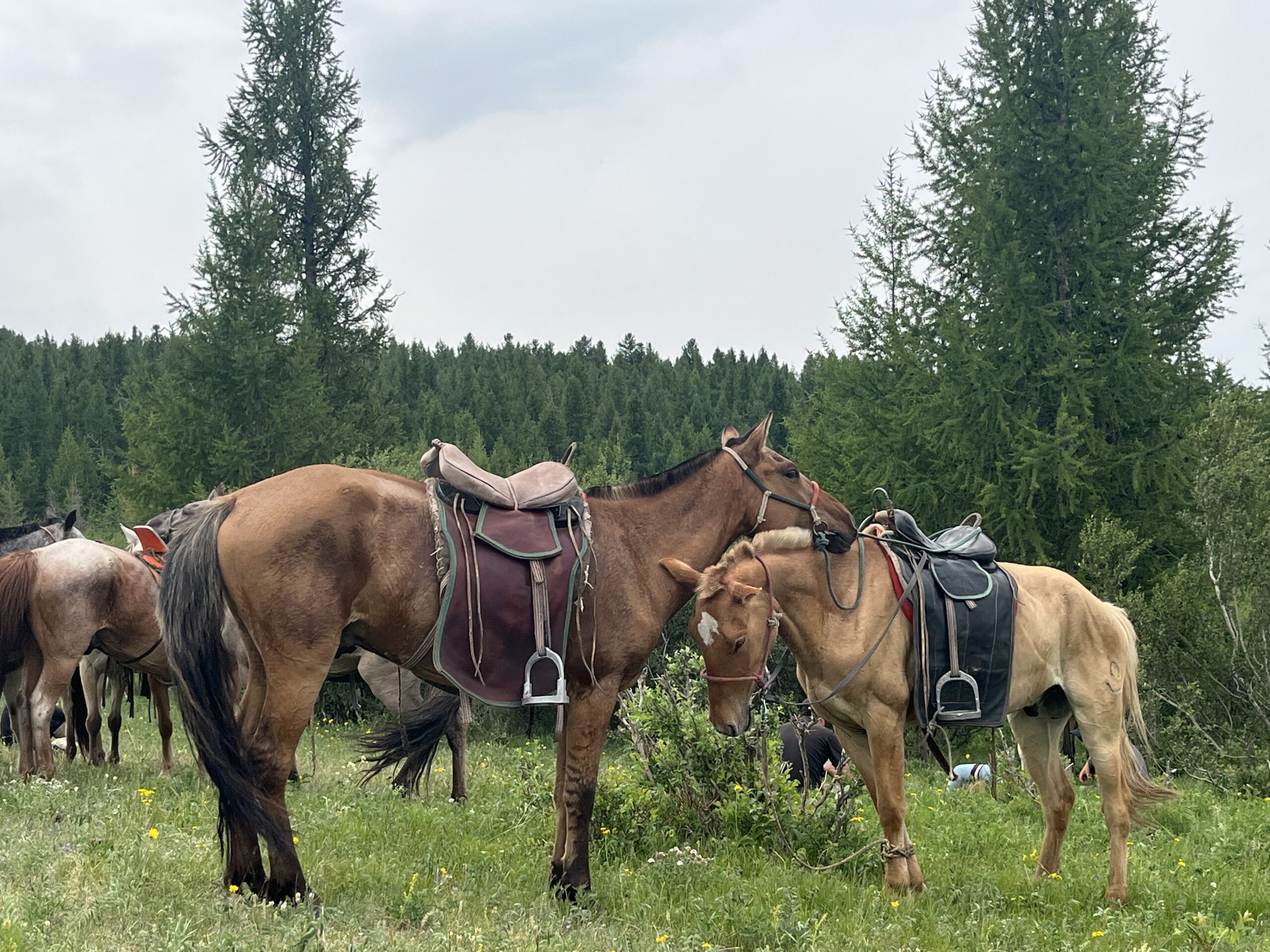
3-1. Approaching your horse
Even before you mount, your horse is trying to figure out what kind of person is going to ride it. Take a moment to observe your horse too — its build, coat color and the ears that show its feelings. The nomads watch closely to see what each horse is thinking. Please help us keep a good, calm atmosphere. When both horse and rider relax, riding becomes safer.
Horses begin to trust you when they sense leadership. Even if your horse does something unexpected, stay calm and confident. That alone will change its attitude.
Wait until a nomad has caught your horse and signals you before approaching. Always approach quietly from the horse’s left side so it notices you. Never approach suddenly or from behind — you could be kicked.
3-2. Mounting
Do not get on your horse until a nomad gives the signal.
When you get the signal, hold the reins or the front of the saddle and put your left foot in the stirrup. Then swing your leg over the horse in one smooth motion and put your right foot in the other stirrup.
If a horse is excited or doesn’t trust its rider, it may try to throw them while they are getting on or off. Horses know that mounting is the moment when a rider is most defenseless. Hold the saddle firmly and don’t let your body rise too high as you swing over.
Once you’re safely on, stay where you are until everyone else has mounted. If your horse wants to walk, ride it in small circles. Simply letting the horse go wherever it likes is not a good idea — focus on communicating your intentions clearly.
3-3. Stirrups
The staff will adjust the stirrups to the length of your legs. Stirrups that are too long make it easy for your feet to slip out; stirrups that are too short make your legs ache. We can adjust them during the ride, so tell us if anything feels wrong. At first, slightly short is safer.
Put your foot into the stirrup only as far as the ball of your foot — not up to the arch. If you fall with your foot pushed too deep into the stirrup, it can get caught and you may be dragged, which is extremely dangerous.
Do not take your feet out of the stirrups while riding. Dangling stirrups can startle the horse and make it start running on its own.
If your foot is about to slip out, or has slipped out, stop your horse immediately. If the others are running and you are being left behind, shout loudly to let them know you have stopped. Once stopped, ask a nomad to shorten your stirrups a little, even though it may tire your legs more.
 Stirrup and foot position
3-4. Holding the reins
The reins are attached to the bit, a bar in the horse’s mouth. The ideal is to control direction and posture while affecting the horse’s mouth as little as possible. The reins are made of leather straps and are not very stiff.
Hold the reins in your dominant hand and the saddle with the other. Hold the reins with the loop coming out on the thumb side. You don’t need to grip hard, but hold them so you can pull when you need to. Move them slowly and clearly.
The hardest thing at first is judging how much slack to give. Keep a moderate, flexible contact — not too tight, not too loose. Each horse prefers a different amount of slack, so feel your way.
If you’re not sure, ask our guide or a nomad for help. For beginners, a nomad will hold the reins together with you, so there’s nothing to worry about.
 How to hold the reins
3-5. Riding posture
Sit up straight with your back upright and your weight evenly in both heels. Keep both legs lightly in contact with the horse’s body. Relax with your feet resting in the stirrups.
At first you may not know how to relax, and tension alone can leave your muscles sore. Be careful not to kick the horse hard because you are too tense. As you get used to it, your body will relax naturally and you’ll tire less.
4. Walk and Trot
4-1. Using the reins
● Moving forward Lean your weight forward and give the reins forward. Say “Choo!” and give the horse a light kick in the sides. Find the right amount gradually so the horse doesn’t speed up all at once.
● Turning Shift your weight in the direction you want to go, pull the rein and turn the horse’s neck that way. Don’t haul on it with force, though. Communicate your intention to turn gently but clearly.
● Stopping Straighten your back, shift your weight backward and pull the reins. Stopping from a canter in particular requires using your whole body to pull back. Slow the horse down before the speed gets out of control. A horse that has built up speed can bolt and become impossible to stop. If that happens, head uphill. Running uphill is tiring, so the horse will gradually stop.
4-2. Walk
When everyone is ready, we’ll ask you to move off slowly and start riding. At first, simply follow the horse in front of you. Please keep a sensible distance from each other and help one another by calling out and giving signals. The walk is the slowest gait. Even at a walk your body moves up and down, so it may take a while to get used to — use this time to get a feel for your horse.
● Talk to your horse. If you feel your horse is about to do something sudden, shout firmly at it to check its momentum. Letting the horse know that the rider is in charge can calm it and stop it from making sudden moves. Just making noise doesn’t work — your voice needs to be clearly directed at the horse. Watch how the nomads use their voices to calm the horses and try doing the same.
● We take breaks during the ride. If you have any requests or don’t feel well, please tell us. We adjust the stirrups after each break. Outside of breaks too, please tell us whenever you feel scared or tired, or if something is wrong with your stirrups.
4-3. Trot
Once you’re comfortable at a walk, we gradually pick up speed. We ride for a while at a trot, the gait just below a canter. As the speed increases, take up more contact on the reins.
The trot is the bounciest gait, so it’s easy to tense up. Until you learn to relax, your bottom will bounce painfully and it’s easy to lose your balance, so be careful.
● The steppe is full of obstacles. We slow down whenever needed — when we see rodent holes, tufts of sheep’s wool, plastic bags or rubbish such as wire, when the terrain changes (roads, fences), or when animals or vehicles approach.
5. Canter
5-1. Canter
Once you’re comfortable at a trot, it’s finally time to canter. The first time, you’ll experience the canter with a nomad leading your horse. The vibration and speed of a canter are a whole different world from the trot.
The safest places to canter are gentle uphill slopes where you can see the ground clearly. Galloping flat out across the vast steppe is an exhilarating feeling like no other. There is less bouncing than at a trot, but it will feel incredibly fast. Even a canter of about one minute is a fresh experience — time seems to stretch out.
We adjust how long we canter to each rider’s experience. If a nomad says no, you cannot canter. Inexperienced riders tire not only themselves but also their horses. Falls are most common when beginners are just starting to feel comfortable. And if you’re encouraged to canter but don’t want to, please say no clearly — don’t hold back.
The trick is: “Keep your head still and let your body be as loose as jelly.” It might even help you switch off your everyday thoughts and listen to your body.
5-2. Safety while cantering
● Hold the saddle firmly. When a horse stumbles on a hole in the ground, you’ll feel a sudden jolt. The horse won’t fall, but you could.
● Look well ahead. Horses sometimes jump sideways to avoid obstacles or rubbish. Also, when a horse trusts its rider, it may keep running even if there’s danger ahead. Try to ride “in conversation” with your horse so you don’t lose its trust.
● Horses can be startled by cars. When crossing a paved road, your horse may be startled by vehicles. Wait for them to pass if you can. If you can’t wait, let your horse get a good look at the vehicle so it knows you are aware of it. Signal to the driver with gestures to slow down. Calling out loudly toward the vehicle also tells your horse, “I’ve seen it, so you’re safe.”
5-3. After cantering
● Walk your horse for a while. Don’t stop suddenly — walk for a bit. Stopping abruptly can injure the horse’s legs.
● Don’t let your horse graze. Horses will want to eat, and you may want to reward them, but grass eaten while the body is hot sticks to the lining of the stomach and can damage the horse’s digestive system.
6. Finishing Your Ride
6. Dismounting
After a nomad signals, check that your left foot comes out of the stirrup properly, then get off on the left side. Dismounting with your left foot still caught in the stirrup is very dangerous.
To thank your horse, gently stroke its neck. Walk away quietly so as not to startle it.
7. The 11 Most Common Causes of Falls — and How to Prevent Them
Here are 11 situations that often lead to falls when riding in Mongolia.
If you keep all of them in mind, you can avoid most falls — and even when a fall seems imminent, you’ll be able to stay in the saddle.
1. A backpack slides around to the front, the horse is startled and bolts, and the rider falls.
Prevention: Carry as little as possible while riding. Put anything you really need in a pouch or backpack that won’t shift. Never open your backpack to take things out while riding.
2. While cantering, the horse jumps sideways to avoid something and the rider loses balance and falls.
Prevention: When cantering, always watch the ground ahead. Avoid risky spots as much as possible (long grass, deep-looking puddles, holes, rubbish).
Hold the reins short so you can stay on even if the horse jumps sideways. Keep enough contact that your rein hand rests on the horse’s neck.
3. A foot comes out of the stirrup, the horse is startled and bolts, and the rider falls.
Prevention: Never take your feet out of the stirrups. At many riding schools, riders take their feet out to rest, but this startles Mongolian horses badly. A dangling stirrup means a hard iron slapping against their sides if they run, and they bolt to get away from it.
4. While cantering, the horse’s front legs buckle, the rider pitches forward and falls.
Prevention: When cantering, ride with the awareness that the horse’s front legs might buckle. Hold the reins at the center of the horse’s neck, just behind its head, so you don’t topple forward even if you lurch.
5. The rider loses balance riding downhill and falls.
Prevention: Going downhill, you lose balance easily if you lean forward, so keep your weight back and your feet firmly in the stirrups. With each step the horse takes downhill, press down into the stirrups and keep your weight firmly in the saddle. Lifting the reins slightly to raise the horse’s head helps keep its body from dropping too low.
6. A bird suddenly flaps up and flies off ahead, the horse is startled and bolts, and the rider falls.
Prevention: When you meet a moment that might startle your horse, immediately shout loudly to settle things down. A loud voice can calm a horse.
7. The rider doesn’t notice a car coming from behind until it suddenly enters the horse’s view; the horse jumps sideways to avoid it and the rider falls.
Prevention: When a vehicle approaches, turn your horse’s head toward it so it can see it. Move as far away from the vehicle as you can.
8. The horse steps on wire, panics trying to get away from it, and the rider falls.
Prevention: Avoid riding through areas with wire or other rubbish.
9. The hat of the rider in front blows off in the wind, the horse behind panics, and the rider falls.
Prevention: Make sure your hat can’t blow away. Don’t ride too close to the horse in front.
10. The horse is kicked by the horse in front, jumps sideways in protest, and the rider falls.
Prevention: Don’t ride close to horses from a different herd.
11. The horse starts running while the rider is getting on or off, and the rider falls.
Prevention: Understand that mounting and dismounting are the moments when you are most defenseless. Horses know this too, and fast horses in particular may try to throw a rider they don’t want to carry. By carrying a person, a horse is entrusting its life to them — so the prouder and faster the horse, the more it tests its rider’s ability. A proud horse won’t accept a rider who can’t handle it.
Mount and dismount with the awareness that your horse might start moving at that moment. It’s also a good idea to check whether your horse is trying to move off as you mount.
8. How to Fall Safely
Here is how to think about falling as safely as possible.
8-1. Deciding whether to fall
The risk of falling is always there. Mongolians say “you get better by falling,” but at first, ride with the attitude “I will absolutely not fall!” Even so, there are times when falling is the only option.
First, judge calmly whether it’s safer to fall or to hang on. If you’ve completely lost your balance, you may have no choice but to fall, but try to hold on first. Falling too easily teaches the horse a bad habit of dropping riders, and you could be seriously hurt.
If you decide you have to fall, a soft-looking patch of grass is the ideal place. Check that no other horses are coming from behind and that there are no rocks nearby.
8-2. Get your feet out of the stirrups
Before you fall, always make sure your feet are free of the stirrups. Never fall with a foot caught. You will be dragged. Remember: falling with your foot caught in a stirrup can kill you. Do whatever it takes not to fall in that situation.
● If your foot does get caught and you fall Grab anything you can: the saddle, the mane, the horse’s neck, its tail. This is an emergency and there is no single right answer.
● What one survivor did (for reference) Gripping the horse’s tail with all their strength, they lifted their head so it wouldn’t hit the ground or rocks. By pulling hard on the tail, they lifted their head and body and managed to work their foot free of the stirrup. They escaped with a broken bone and survived. (This happened when one of our staff members joined another company’s tour.)
8-3. Fall to the side
Make sure the reins aren’t wrapped around your hand, and let go of them as you fall. Try to fall forward and to the side. Falling backward can lead to fatal kicks. The nomads will chase and catch the horse, so there’s no need to hold on to it.
● Break your fall Reaching out to land on your hands can cause serious injury. Curl up like a judo breakfall and protect your head. If another horse is bearing down from behind, get out of the way immediately; once you’re safe, wait where you are until help arrives.
8-4. Key points for not falling
Here are the actions that help you stay on.
1. Hold the reins short
The faster you go, the shorter you should hold the reins. Hold them so short that there’s almost no gap between your hand and the horse’s neck — that way you can pull hard when you need to.
*If you hold them too short, you’ll take the full force of the horse’s neck movement, so keep your body supple.
2. Keep your weight firmly in your heels
It’s very dangerous for your feet to lift and slip out of the stirrups, so keep your weight in your heels and push it firmly downward. Sinking your weight into your heels also stabilizes your riding position.
3. Grip the horse with your thighs and legs
Squeeze the horse firmly with your thighs and lower legs — imagine holding on with your whole lower body. A good grip lets you withstand the horse’s sudden movements.
8-5. Don’t tense up when you fall
Stiffening your body as you fall can lead to serious injury. Keep your body soft, and ride naturally with your upper body as loose as jelly. Whenever you feel scared, tell our guide right away and stop first. Resolve whatever is frightening you before moving on. If the fear doesn’t go away, it’s perfectly fine to get off and walk. A rider’s fear is contagious — remember that your horse is probably frightened too. In that state a horse may make sudden moves to escape danger, and those moves can lead to a fall.
9. Emergencies
What happens after a fall.
9-1. Our approach
People can go into shock after a fall, so our guide will take the time to check the situation carefully and change plans as needed. If any other injury or accident occurs, it becomes our top priority.
We cannot accept liability for accidents or injuries, so hospital fees and the cost of changing your itinerary are your own responsibility. Be sure to take out travel insurance, and check in advance how you would receive payment. If a rider is unconscious or confused, the staff will decide to take them to hospital and will contact the emergency contact you gave us.
9-2. Checking the situation
Check whether you hit your head, whether you can move your body, whether anything hurts, whether you have paralysis or numbness in your arms or legs, and whether your memory is hazy.
A hard blow to the head can be life-threatening, so tell the people around you — don’t hold back. For about two days (especially the first six hours), watch carefully for anything unusual. Bleeding inside the skull can become life-threatening later on. If things get worse — for example the pain increases — tell us immediately so we can respond.
If you’re with someone who has fallen, do not shake or slap them. Check for injuries, bleeding, convulsions, vomiting or confused speech, whether they seem dazed, and whether they can make eye contact.
9-3. Deciding what to do
Once we’ve assessed the situation, we decide which of the following levels ① to ③ applies.
① Continue riding If you fell safely or only have scrapes, you can continue riding. Your horse’s trust in you will have dropped, so you’ll need to ride very carefully. Let a nomad lead your horse for a while.
…If your condition seems to be getting worse, go to ②.
② First aid If you need first aid or don’t want to keep riding, we’ll call a vehicle. First aid at the base camp, accommodation, or in the support vehicle on camping tours is very limited. If necessary, we’ll head to a hospital in Ulaanbaatar. Please also decide whether to stop the tour altogether.
- Example 1) A bump: cool it with an ice pack over a towel and monitor.
- Example 2) Bleeding: press firmly with a clean towel to stop the bleeding, and raise the wound above the heart.
…If your condition seems to be getting worse, go to ③.
③ Emergency transfer to hospital If you are in too much pain to move, or the staff judge that your life may be at risk, we’ll call a vehicle and take you to a hospital in Ulaanbaatar as an emergency. Even in the capital, hospitals are not as well equipped as in many other countries. We recommend a thorough medical check after you return home.
● Signs that a life may be at risk:
- Loss of consciousness
- Clearly behaving differently from before riding
- Pupils of different sizes
- Bleeding or fluid leaking from the ears or nose
- Convulsions
- Inability to move part of the body
- A dent where the head was struck
- Hazy memory of what happened before or after
- Persistent nausea or feeling unwell, or repeated vomiting
9-4. If surgery is needed in your home country
There are many problems Mongolian hospitals cannot treat, so we recommend having any major surgery in your home country.
Treatment at a Mongolian hospital, changes to flight tickets and extra accommodation costs are all covered (if at all) by your own travel insurance, so check in advance with your insurer which documents they need. Medical certificates issued in Mongolia are often in Mongolian, and even English ones frequently don’t meet insurers’ requirements. While you are still in Mongolia, agree with the doctor issuing the certificate on the format you need, and get the necessary documents issued. They often cannot be reissued after you return home.
10. Closing
Thank you for reading to the end.
In reality, most of this can only be learned on horseback, but having this background knowledge will make a big difference to your riding experience. Our greatest joy is when you sense even a glimmer of communication with your horse that goes beyond species and language. We believe that is the very essence of Mongolia’s equestrian culture. We are a small, family-run travel company, but we see ourselves as a bridge between Mongolia and the rest of the world, and we sincerely hope you will ride safely and have a wonderful time.
We look forward to meeting you on the Mongolian steppe.

Great-value Mongolia riding tours — beginners welcome
At Tsogto Mongolia Horse Riding Tour we offer courses where even beginners can ride with confidence. Our experienced guides support you every step of the way as you enjoy riding across Mongolia’s magnificent steppe.